

Experienced eLearning Company in Gauteng
Our team is well experienced in eLearning Content Development. We make use of instructional design to ensure that the learning content is aligned with learning objectives, learning activities and the various learning styles/personalities. We make use of both the SAM and ADDIE learning models to ensure that we are able to develop a wide variety of content covering multiple topics. We are also proficient in working alongside subject matter experts, allowing us to produce effective learning content.
Learning Content Options

Training Videos
Video content is great for explaining various topics while providing thorough and effective learning information to viewers.

Voice-Over Courses
Voice-over content is very effective when used in conjunction with other mediums to bolster knowledge provided, but could also be used as explanatory podcasts.

Interactive E-Books
Interactive e-books are a great way to explain concepts to learners while keeping them engaged with the text based content provided.

Quizzes
Quizzes are effective when used with other learning mediums because it aims to test knowledge retention and pushes learners to be more attentive.

Image / Slide based content
Image and slide based content works well to visualise certain actions, methods or systems. This type of content is especially effective when used with e-books and voice-over content.

Gamification
Gamification offers effective learning through friendly competitiveness, leaderboards, achievements, badges and result tracking.

Virtual Reality
Virtual Reality offers full immersive learning, this allows us to train learners on systems and/or actions that may be less accessible or pose danger to health and safety.

Animation
Animation is well regarded for it's ability to explain difficult subjects in a way that is easy and digestible.

Augmented Reality
Augmented Reality training can be used to augment real world situations, systems and methods to provide deeper and interactive practical learning.

SCORM Compliant
The content developed by our team follows the standardised
structure provided by the ‘Shareable Content Object
Reference Model’or SCORM. This ensures that the learning
content developed will be compatible with most
learning management systems.

Who is it for?
eLearning has found widespread use in a number of fields
including academic, corporate, industrial and commercial
institutions or companies. It allows for effective training,
learning and skills development and far surpasses the
capabilities of traditional training and learning.
Interested in working with us?
Call Us: +27 82 491 5824 (Francois) // Mail Us: Info@soundidea.co.za
eLearning Development Levels
At Sound Idea Digital, we offer four tiers of eLearning development, each designed to match your
training goals, learner needs, and budget.
From quick, text-based modules to immersive VR experiences, our solutions scale with the complexity of your content.
Level 1: Basic eLearning
A fast, affordable way to digitise training.
Level 1 eLearning focuses on simplicity and clarity.
It’s ideal for straightforward information transfer where multimedia is not essential.
Features include:
- Clean, text-based content
- Basic navigation
- Simple quizzes
- No audio or multimedia
- Quick template setup
Typical development time: A few days to one week
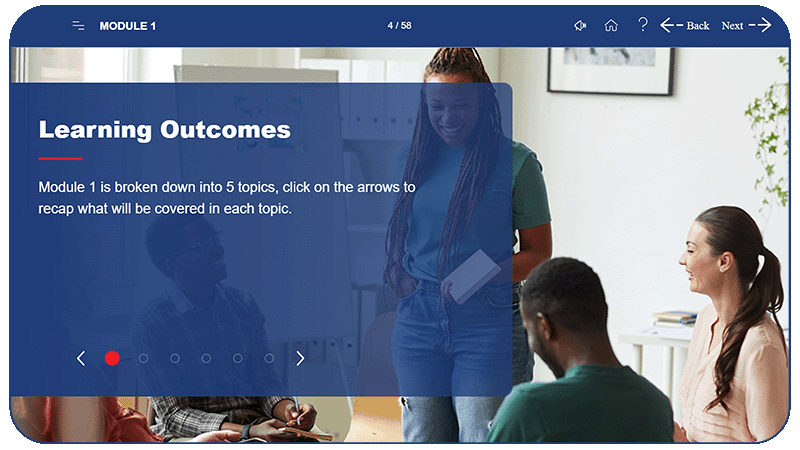
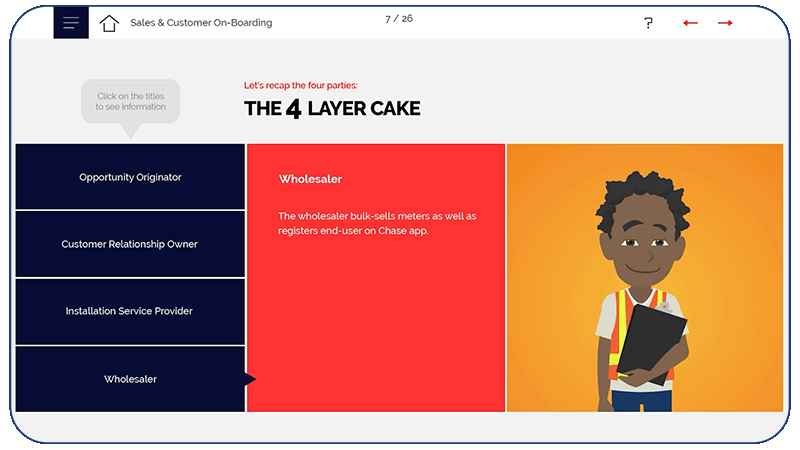
Level 2: Enhanced eLearning
More engaging experiences with light interactivity.
Level 2 adds visual and interactive elements that help learners stay engaged
while still keeping development time efficient.
Features include:
• Text supported by images and graphics
• Interactive elements such as buttons and drag-and-drop activities
• Professional voice-over narration
• Knowledge checks and quizzes
• Customised template design
Typical development time: 2–4 weeks
Level 3: Advanced eLearning
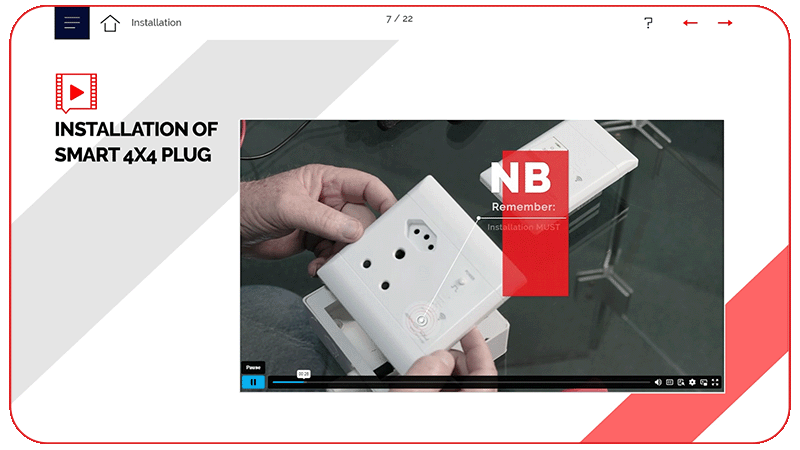
Highly interactive, media-rich learning experiences.
Level 3 training incorporates advanced multimedia and motion
to create a more polished, dynamic experience suited for complex topics.
Features include:
• High-quality images and graphics
• Rapid animations, motion graphics, and video
• Advanced interactive components
• Voice-over and sound design
• Bespoke visual templates
Typical development time: 1–3 months
Level 4: Immersive eLearning (VR/AR)
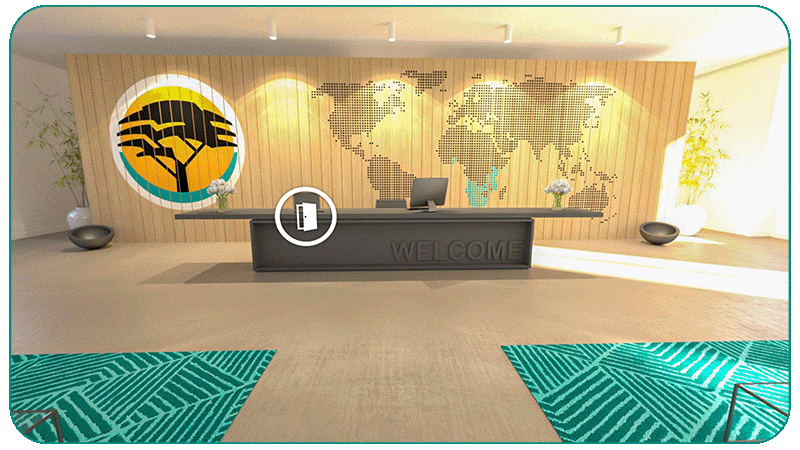
Next-generation training powered by gaming technology.
Level 4 uses virtual and augmented reality to recreate real-world environments and scenarios,
ideal for high-risk or highly specialised training.
Features include:
• Fully rendered 3D environments
• Interactive VR/AR simulations
• Scenario-based learning
• Deep multimedia integration
• Custom-built templates and interactions
Typical development time: 3–6 months or more
Let’s Find the Right eLearning Solution for Your Team.
Call Us: +27 82 491 5824 (Francois) // Mail Us: Info@soundidea.co.za
Our Instructional Design Approach

1. We lead with the problem, not the content
We start with performance gaps.
We ask questions like:
• What are learners doing wrong today?
• What should they do differently tomorrow?
• What’s stopping them, knowledge, skill, motivation, environment?
Business Goal → Performance Gap → Learning Strategy → Measurable Outcome

2. Our instructional design framework
1. Analysis – audience, context, constraints, success metrics
2. Design – learning objectives tied to job tasks
3. Experience – scenarios, practice, feedback
4. Measurement – behaviour change and business impact
We use proven instructional design models like ADDIE and Bloom’s Taxonomy, but we apply them pragmatically to real-world business problems.

3. Outcome-driven design and learning decisions
We define clear, outcome-based learning objectives from the start.
Weak: “Learners will understand…”
Strong: “Learners will be able to…”
Every design decision is then aligned to these outcomes and how adults learn at work.
For example:
• Why we sometimes use scenario-based learning instead of video.
• Why we used Whiteboard Animation instead of Character Animation.
• Why simulations were used.
• Why reinforcement over time was built in.

4. How we handle different learner audiences
We design for:
• Frontline vs management
• Low digital literacy vs advanced users
• Time-poor learners
• Multi-language or multi-region audiences
We adapt instructional strategies based on learner role, risk level, and time available, not one-size-fits-all courses.

5. We understand behaviour change
We design learning ecosystems, not just courses, pre-work, core learning, job aids, and reinforcement.
• Practice, not just content
• Feedback loops
• Spaced repetition
• On-the-job application
• Manager reinforcement

6. How we engage with SME’s.
• Our instructional Designers work alongside SMEs
• We respect SMEs’ time while extracting expertise effectively
Our instructional designers translate expert knowledge into learner performance, without overwhelming SMEs.
Our Multimedia & eLearning
Development Approach
We design engaging, effective learning experiences by combining strong instructional design with world-class multimedia production.
Our structured development approach ensures every course is accurate, interactive, and aligned with your training goals.
We start by building the foundation: meaningful, high-quality content.
• Craft or curate accurate, relevant, and concise learning material.
• Use a rich mix of media, text, audio, video, animation, graphics, and simulations.
• Support various learning styles, including visual, auditory, and kinaesthetic.
• Write clear, conversational narration and on-screen text for easy comprehension.
Next, we bring the content to life.
• Produce high-quality visuals, animations, and video content.
• Enhance engagement with professional voiceovers and sound design.
• Build interactive elements like quizzes, drag-and-drops, and clickable diagrams.
• Optimise all media for fast loading times and seamless device compatibility.
Our team transforms your content into a fully interactive digital course.
• Develop using leading authoring tools (Articulate Storyline, Rise, Adobe Captivate) or custom-coded solutions.
• Integrate multimedia assets and interactive components for a cohesive experience.
• Ensure accessibility (WCAG compliant) and responsive design for all devices.
• Enable full LMS tracking through SCORM, xAPI, or custom integrations.
Before launch, every course undergoes rigorous testing.
• Test functionality across multiple devices and browsers.
• Verify content accuracy, media quality, and interactive performance.
• Gather feedback from SMEs and representative learners.
• Resolve issues, refine usability, and polish the final product.
We make deployment simple and stress-free.
• Launch your training on your LMS or preferred delivery platform.
• Ensure smooth access for learners with reliable technical support.
• Provide clear instructions, help guides, and support resources.
Training is never a once-off event, we help you improve it over time.
• Collect learner feedback, analytics, and performance data.
• Assess engagement, completion rates, and assessment results.
• Identify gaps or optimisation opportunities.
• Continuously refine and update content for long-term effectiveness.
Want to Apply This Approach to Your Training?
Call Us: +27 82 491 5824 (Francois) // Mail Us: Info@soundidea.co.za
Our Collaboration and Project Management Model
At the heart of every successful project is a clear process,
transparent communication, and seamless collaboration.
Our project management model ensures that every phase, from planning to delivery,
is structured, efficient, and built for quality.
We start every project with a strong foundation.
- Define Goals and Scope:
We work with you to clarify objectives, deliverables, timelines, and budget requirements. - Identify Stakeholders:
Together we establish who needs to be involved, including clients, SMEs, designers, developers, and QA specialists. - Assign Roles & Responsibilities:
Using a RACI matrix, we clearly outline ownership and accountability for every task. - Create a Detailed Project Plan:
Tasks, milestones, and dependencies are mapped out to provide a clear roadmap from start to finish.
Clear communication keeps projects moving smoothly.
- Kick-off Meeting:
We align the entire team on goals, timelines, roles, and communication standards. - Regular Check-ins:
Daily stand-ups or weekly status meetings ensure blockers are resolved quickly and progress stays on track. - Centralised Communication:
Shared collaboration channels keep discussions organised and reduce email clutter. - Comprehensive Documentation:
All notes, decisions, feedback, and changes are recorded in a central repository for full transparency.
We maintain order and consistency across all project assets.
- Version Control Systems:
Scripts, source files, and multimedia assets are managed through reliable versioning tools. - Clear Naming Conventions:
Standardised folder structures and names ensure nothing gets lost or duplicated. - Check-in/Check-out Processes:
We prevent file conflicts by controlling access when multiple team members collaborate on the same asset.
Our structured review process ensures clarity and quality.
- Defined Review Cycles:
We set timelines for drafts, reviews, and revisions to maintain momentum. - Collaborative Review Tools:
Tools like Google Docs allow for real-time comments and easy collaboration. - Consolidated Feedback:
Our project manager prioritises and communicates feedback clearly and efficiently. - Tracked Changes & Approvals:
Every request, update, and approval is logged for full visibility.
Proactive risk management keeps projects on track.
- Early Risk Identification:
We assess technical, resource, scope, and timeline risks upfront. - Mitigation Planning:
Contingency plans are created to address key risk areas. - Ongoing Risk Reviews:
Risks are evaluated regularly during team check-ins.
Quality is built into our process, not added at the end.
- QA reviews are included throughout the project timeline, ensuring sufficient time for testing and fixes.
- Our QA team stays engaged from start to finish to catch issues early and often.
We end every project with clarity, celebration, and continuous improvement.
- Final Review & Approval:
All deliverables are validated against the agreed scope and quality standards. - Handover Documentation:
We supply all required files, guides, and training materials. - Post-Project Retrospective:
Together we review successes, challenges, and lessons learned. - Celebrate Success:
We acknowledge the team effort behind each project milestone.
Review & Quality Assurance
for eLearning Production
At Sound Idea Digital, every course we produce goes through a rigorous, end-to-end quality assurance process.
This ensures your learners receive content that is accurate, engaging, and technically flawless across all platforms.
Phase 1: Content & Instructional Review
We ensure all learning content is accurate, aligned, and clearly communicated.
- Subject Matter Expert Validation: All text, visuals, audio, and video are by SMEs to ensure absolute accuracy and relevance. Every fact, technical term, and instructional point is checked for clarity and correctness.
- Instructional Design Review: Our instructional designers confirm that each module aligns with the learning objectives, flows logically, and includes assessments and activities that reinforce the desired outcomes.
- Copyediting & Proofreading: We refine all language for clarity, conciseness, and consistency. Grammar, spelling, punctuation, and tone are thoroughly checked to ensure professional, learner-friendly communication.
Phase 2: Technical Quality Assurance
We rigorously test every component to ensure a seamless and reliable learning experience.
- Functionality Testing: We test every interactive component, quizzes, buttons, links, simulations, and drag-and-drops, to ensure perfect functionality. Multimedia elements are validated across devices and browsers to guarantee seamless playback.
- Compatibility Testing: Courses are tested on all major browsers (Chrome, Firefox, Safari, Edge) and on multiple devices (desktop, tablet, mobile). Responsive design and mobile usability are standard.
- SCORM/xAPI Compliance: We ensure learning data is accurately tracked within your LMS, including completion status, progress, and assessment results.
Phase 3: Feedback & Continuous Improvement
We validate the learning experience and continuously refine it.
- User Experience Testing: Navigation, pacing, readability, UI consistency, and overall flow are reviewed from a learner’s perspective.
- Pilot Testing: A representative group of learners completes the course before launch to identify content gaps, engagement issues, and technical bugs.
- Feedback & Iteration: Feedback is categorised, analysed, prioritised, and used to refine the course, with re-testing where needed.
- Final Sign-Off: All key stakeholders review and approve the course before deployment to ensure accountability, alignment, and quality.
- Post-Launch Monitoring: After release, learner analytics and feedback are tracked to support ongoing improvements and updates.